
AR/VR Frameworks
Our specialists utilize the best AR VR development frameworks, like Unity XR, Unreal Engine VR to ARKit and ARCore, to develop immersive, high-performance experiences. INFINITY-UP team operates in a variety of AR and VR development frameworks, such as OpenXR, Vuforia, MRTK, Meta XR SDK, depending on the needs of a project. The proper choice of AR VR frameworks is vital for performance, accuracy of tracking and device compatibility in case of AR and VR development. We provide our customers with AR/VR projects in all major platforms, including WebXR browser experience and SteamVR/Oculus SDK builds.
What Are AR VR Frameworks?
AR VR frameworks are SDKs that provide the tracking, rendering, and device tools needed to build AR and VR apps. They give developers a ready-made AR VR technology stack instead of building from scratch.
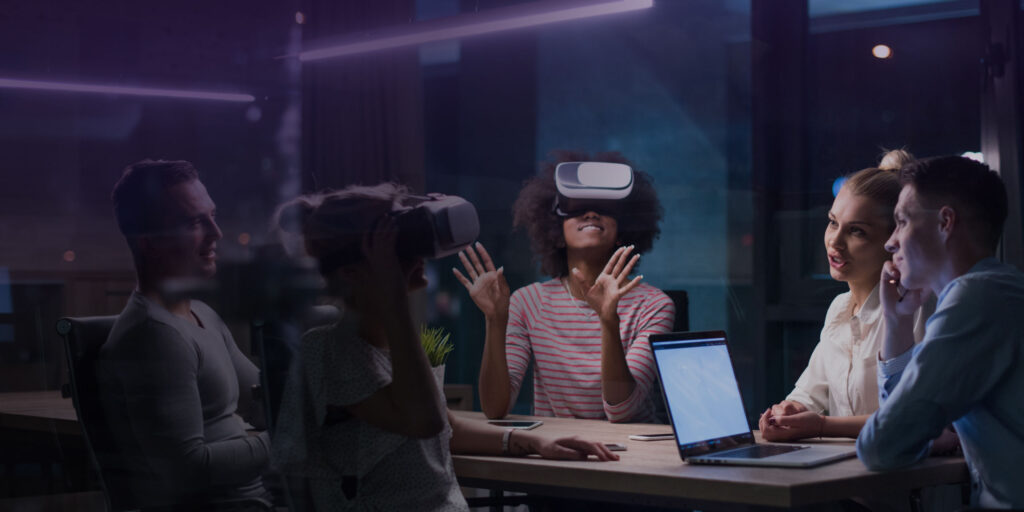
How AR VR Frameworks Work
Tracking
Frameworks like ARKit, ARCore, and SteamVR SDK track device position, hand movement, and surroundings in real time.
Rendering
Displays 3D content either aligned with the real world (AR) or creates an immersive environment (VR) using software frameworks like OpenXR.
Device Integration
Connects the app to headsets, controllers, and sensors so AR/VR frameworks support multiple devices without separate code.
Output
The final experience is delivered through the headset display or camera overlay, powered by underlying AR/VR development tools.
Benefits of Using AR VR Frameworks
Faster development
An already established AR/VR technology stack ensures that there is no need for development of tracking, rendering and hardware interfaces from the scratch, which saves significant development time.
Cross-device compatibility
Frameworks like OpenXR and WebXR let one build run across multiple headsets and devices instead of coding separately for each.
Reliable tracking & performance
Applications such as ARKit, ARCore, and SteamVR SDK are developed and supported by the platform providers, providing reliable tracking accuracy.
Access to proven technologies
Using established technologies used in AR VR development reduces technical risk compared to building custom low-level systems.
Scalable for game development
The same frameworks used for enterprise AR/VR apps scale into AR VR game development technologies, supporting everything from simple AR filters to full VR games.
Popular & Best AR VR Frameworks
Our AR/VR Development Process
Discovery & Planning
We define the platform, target devices, and use case, choosing the right AR VR development frameworks for the project.
Framework Selection
Based on the target platform, we choose from Unity XR, Unreal Engine VR, ARKit, ARCore, WebXR, or other frameworks in our stack.
Prototyping
We build a testable AR/VR prototype early to validate tracking, interaction, and comfort before full development.
Development
Full build-out of the experience, assets, interactions, tracking, and rendering come together using the selected AR VR technology stack.
Optimization
We tune performance for target devices, ensuring smooth frame rates and stable tracking across headsets or mobile AR.
Testing & Launch
Cross-device testing on real hardware, then deployment to app stores, headset platforms, or the web.
Client Success Stories
What Our Clients Say



5.0
“INFINITY-UP delivered high-quality game prototypes, satisfying the internal team’s needs. Not only did they produce excellent outputs, but they also adhered to deadlines and implemented revisions quickly. The team was also responsive, intelligent, and innovative.”
Yohami Zerpa
CEO
Nowwa/Gamebop

5.0
“INFINITY-UP was able to deliver a high-quality product within the given timeframe, much to the client’s delight. The team was highly responsive, and internal stakeholders were particularly impressed with the vendor’s solutions-based approach.”
Frank Vidal
Director of Delivery, Rose Digital

5.0
“INFINITY-UP delivered a fully functional game that is considered a great success by the client the project was delivered within the agreed-upon time frame. Their team was professional, cooperative, experienced, and communicative.”
Nawaf Ammar
Sr Risk Specialist
IT Services Company

5.0
Mirza Atif
Project Manager
Whetstonez