
How Are Video Games Developed? A Comprehensive Guide
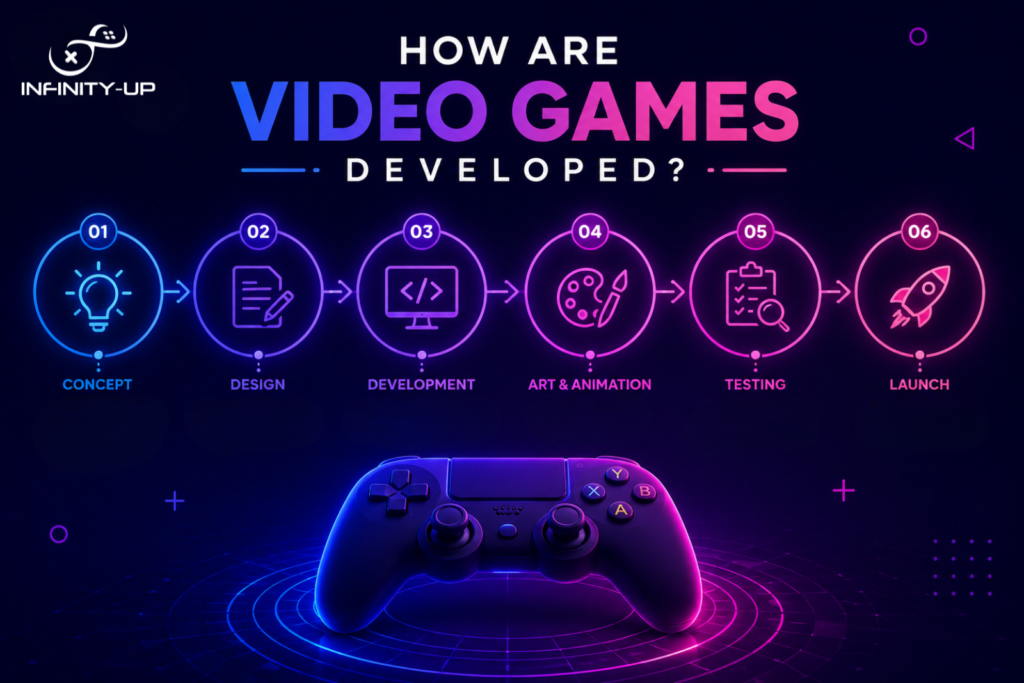
Video game development is the process of designing, building, and releasing a game that means turning an idea into a playable, polished product. Whether it’s a two-person indie project or a AAA release with a 500-person studio, the query “how are video games made” follows a fairly consistent structure: concept, design, production, testing, and launch.
In this guide, we will discuss the full game development process, the people behind it, the tools they use, and what it actually takes to make games.
What Is Video Game Development?
Video game development can be defined as the creative and technological process that transforms an idea into a working game through programming, artistic efforts, sound and design among other aspects to form a single product. There is sometimes confusion between video game development and video game design; the latter simply forms a part of video game development whereby the game development team determines how the game will work.
The Complete Video Game Development Process
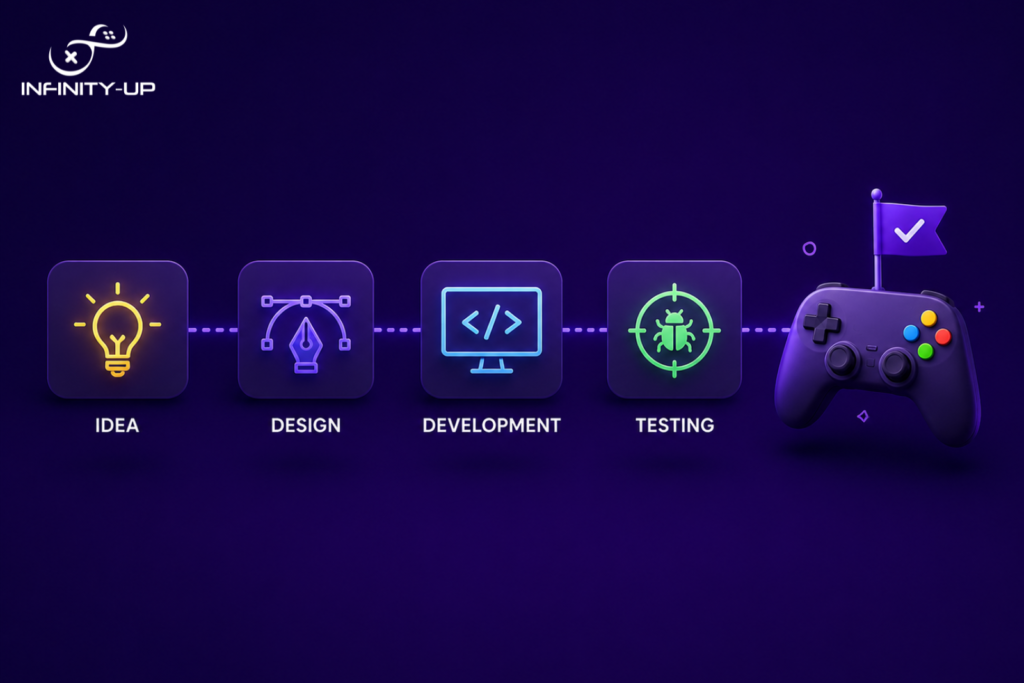
Every game, regardless of genre or platform, moves through the same core game development services. Understanding this workflow explains how games are made from a rough idea to a finished, shippable product and why the process behind even simple titles takes months or years.
Concept and Idea Generation
Development begins with brainstorming: core concept, target audience, and genre. The market research at this point determines whether the concept has an audience and is not saturated.
Pre-Production
This phase turns the concept into a plan, a Game Design Document (GDD) covering story, characters, mechanics, and technical requirements. Studios also choose their game engine here (Unity, Unreal, Godot), which shapes the entire production pipeline going forward.
Prototyping
Teams build a rough, playable prototype to test whether core gameplay mechanics are actually fun. Early feedback at this stage often reshapes the design before real production money is spent.
Production
This is the longest phase of the game development pipeline: programming, level design, 2D/3D art, animation, sound, music, and UI/UX all come together simultaneously. Most of a game’s budget and headcount is spent here.
Testing and Quality Assurance (QA)
QA testers hunt for bugs, check performance across hardware, balance gameplay difficulty, and verify compatibility across devices and platforms. This stage is what separates a shippable game from a broken one.
Launch and Publishing
Marketing begins well before the game is released, and the developers decide which platforms they will distribute their game on (Steam, console, or mobile app stores) and how they will release it: all at once or step-by-step.
Post-Launch Support
Development doesn’t end at launch. Bug patches, DLCs, expansions, live updates, and community feedback loops keep a game evolving, sometimes for years after release.
Who Works on a Video Game Development Team?
- Game Designers
- Programmers
- Technical Artists
- 3D Artists
- Animators
- Sound Designers
- QA Testers
- Producers
- Project Managers
What Software Is Used to Develop Video Games?
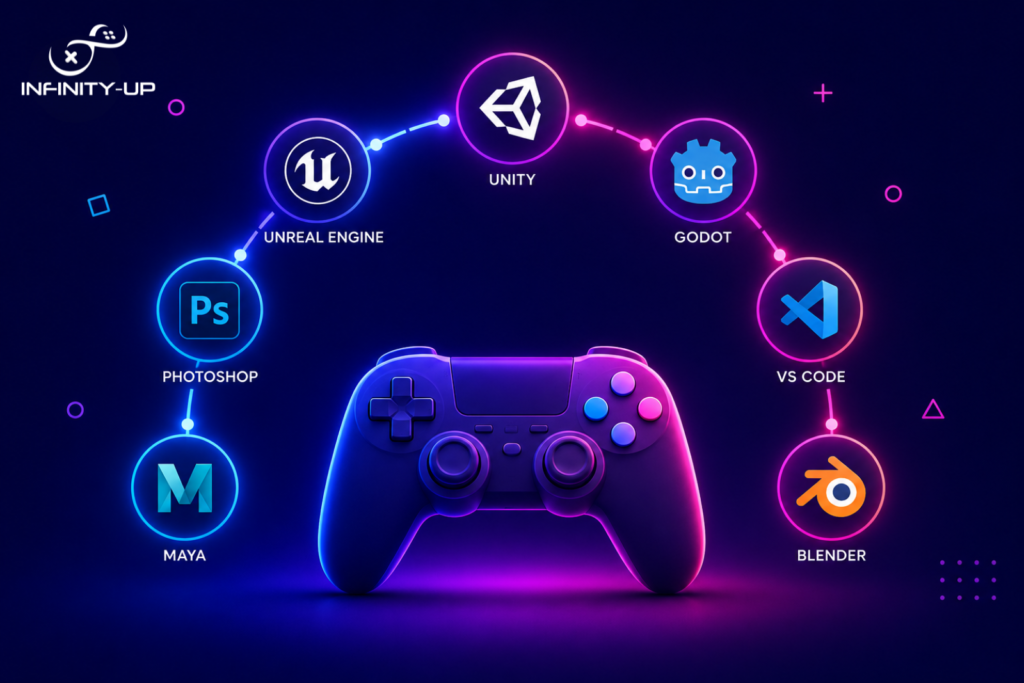
The most common game development tools include Unity development platform and Unreal Engine for building the game itself, Godot as a free, open-source alternative, and Blender or Maya for 3D modeling and animation. Photoshop handles 2D art and textures, Visual Studio is the standard for coding, and Git/GitHub manages version control across the team.
How Long Does It Take to Develop a Video Game?
Timelines vary significantly depending on scope. Mobile games can take a few months to a year, indie games typically run one to three years, AA games take two to four years, and AAA games often take four to six-plus years. Team size, budget, engine familiarity, and scope changes are the biggest factors affecting development time.
Common Challenges in Video Game Development
Most projects face the same recurring problems: scope creep, budget constraints, and technical issues that eat into timelines. Performance optimization, team collaboration across departments, and tight deadlines add further pressure, which is why so many games slip their original release dates.
Skills Needed to Become a Game Developer
Generally, aspiring programmers must have a good combination of programming skills, problem-solving skills, and knowledge in mathematics. This is because communication and cooperation are equally essential in games development.
How Indie Game Development Differs from AAA Game Development
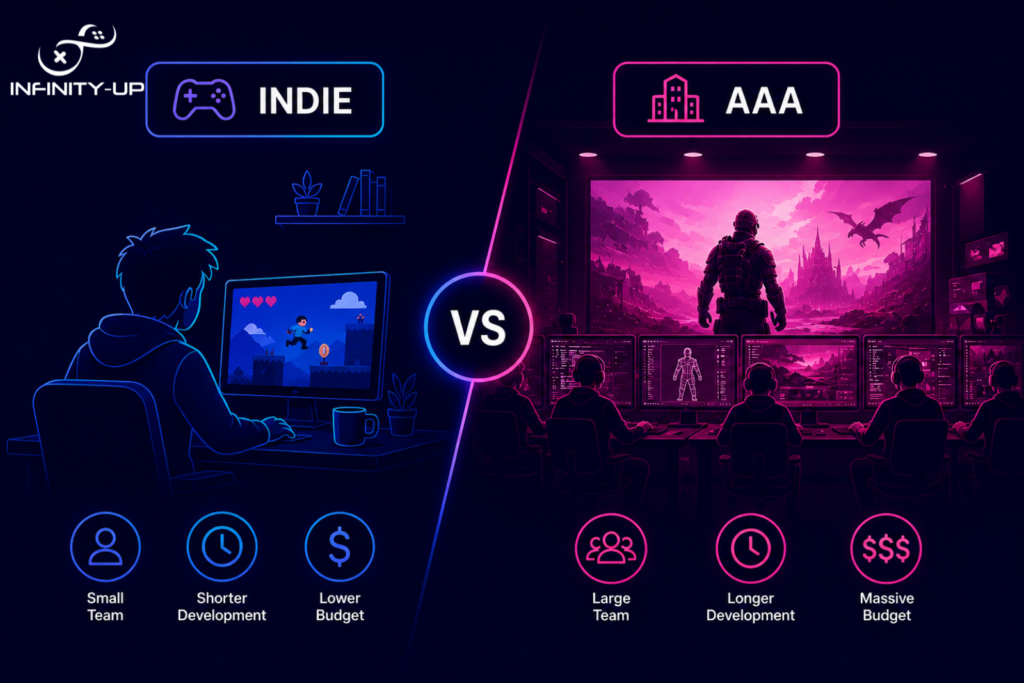
Indie Games | AAA Games |
Small teams | Large studios |
Lower budgets | Multi-million dollar budgets |
Faster development | Longer development cycles |
Greater creative freedom | Larger production pipelines |
Ready to Start Your Game Development Project?
Whether you’re planning a mobile title, an indie project, or a full AAA production, getting the game development process right from day one makes all the difference. If you’d like to discuss your project with our team, we’ll help you map out the right approach.
Final Thoughts
The creation of video games is a complex, multistage process where technological precision meets creativity, moving from a first idea drawn on paper to the final product, the game that is ready to be played. At each of the stages, there must be teamwork between programmers, artists, designers, and producers, who solve their own parts of one puzzle. The knowledge of how video games are created helps both developers and gamers value them more.
Frequently Asked Questions
Q1: What programming languages are used in game development?
C++, C#, and Python are the most common, depending on the engine.
Q2: What is the first stage of video game development?
Concept and idea generation, including market research and audience targeting.
Q3: Can one person develop a video game?
Yes, many indie games are built solo using engines like Unity or Godot.
Q4: What game engine is best for beginners?
Unity and Godot are generally considered the most beginner-friendly.
Q5: Is game development difficult?
It’s technically and creatively demanding, but learnable with consistent practice.