


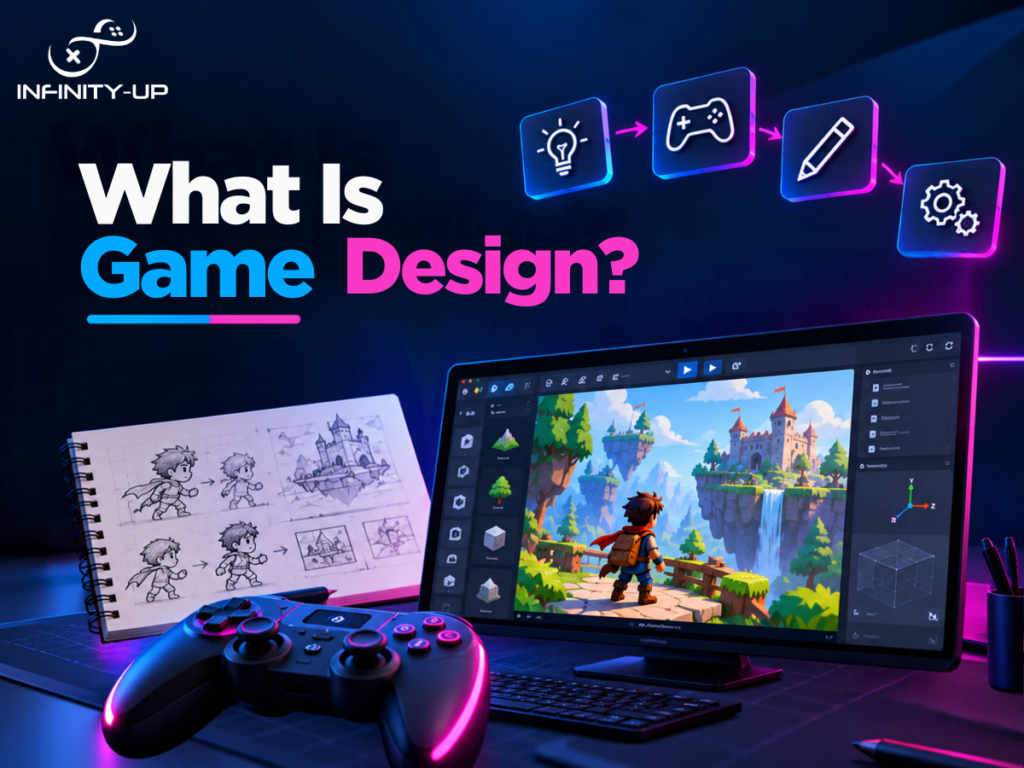
Game design is an area of game development concerned with developing gameplay, game mechanics and other elements related to making a game entertaining and enjoyable. In layman’s terms, game design is simply the thought process that underlies gameplay, character movement, player choices and motivations to continue playing. It involves both minor decisions, such as the character’s jumping ability and major aspects of the game, such as its objective and the way players will be rewarded for achieving their objective.
This applies whether you’re talking about a board game, a mobile app or a full console release. What is digital game design, specifically? It’s the same idea, just applied to video games, where the designer also has to think about how those rules turn into code, screens and player controls like a controller, keyboard or touchscreen. So if you’ve ever wondered what is a game design, think of it as the blueprint built before any code or art comes together. And if you’ve ever wondered what games design actually means, that’s the short answer.
What Does a Game Designer Do?
Game designing involves determining the way the game is to be played and not the way the game will look like or its technicalities. This is where the designer defines rules of play, determines the limitations and abilities of the player and also plans and designs levels that give a sense of challenge to the game. In a larger development team, the designer concentrates on only a part of it while in a smaller team, he does it all.
What Is the Difference Between Game Design and Game Development?
This is one of the most common mix-ups, so here’s the simple version.
Game Design | Game Development | |
Focus | Rules, mechanics, player experience | Building and coding the game |
Main Question | How should this feel to play? | How do we make this work? |
Typical Output | Game design document, prototypes | Working code, art assets, final build |
Skills Needed | Creativity, systems thinking | Programming, art, production |
Put simply, what is game design and development together? Development is the bigger umbrella that covers everything needed to build a game and design is one part of that process, focused specifically on how the game plays.
The Main Elements of Game Design
A full game design pulls together several pieces that all work together.
- Mechanics: the actions a player can take, like jumping, collecting or fighting.
- Level design: how spaces are built to guide and challenge the player.
- Story and narrative: the world, characters and reason the player cares.
- Art and sound: the look and feel that match the game’s tone.
- UI and UX: how players interact with menus, controls and feedback.
- Balance and progression: making sure the game stays fair and gets harder at a reasonable pace.
The Game Design Process
Making a game rarely goes in a straight line. It’s more like a loop you keep running until the game actually feels good to play.
Step 1: Start With an Idea
Every game begins with a simple spark. What is the player doing and why would they want to do it?
Step 2: Build Something Rough
Forget polish for now. A paper sketch, a basic prototype, even cardboard pieces on a table can test whether the idea actually works before you spend months building it properly.
Step 3: Hand It to Real Players
This is where things get honest. Watch people play instead of just asking what they think. Players often get stuck, confused or bored in places you never expected and that’s exactly the information you need.
Step 4: Fix What's Not Working
Take what you saw and make changes. Maybe a level is too hard, a rule is confusing, or the pacing drags. Small adjustments here can completely change how a game feels.
Step 5: Test It Again
And again. And probably again after that. Most games go through this loop dozens of times before release, because the fun part of a game is rarely obvious on paper. It only shows up once real players get their hands on it.
What Skills Do You Need for Game Design?
There is no need to be able to code in order to learn game design, but there are some skills that may come handy. Creativity and problem-solving are number one because you will be constantly coming up with solutions on how to make certain things entertaining. Being able to communicate with artists, programmers and writers will also be very helpful.
How to Learn Game Design
There is no need to sign up for a program or a course in order to start learning game design. There are various free tools such as Twine, GDevelop, paper prototyping and other ways to develop your ideas without having to write any code at all. Joining a community for game designers and doing some small projects will give you enough experience before classes even start.
You may like to read: What Is 3D Game Art? A Complete Guide for Game Studios
Game Design Careers
Game design is a broad field with many different job titles including systems designer, level designer, narrative designer, UX designer and many others. While some companies like having a degree in a candidate, most value the portfolio of the applicant and how they know how to create fun games. Wages depend highly on the company, location and the level of experience. It would be useful to look up wages similar to the one you aspire to obtain.
Conclusion
In simple terms, game design can be defined by one main concept developing an experience for a game. If you are just interested in what game design is all about or considering acquiring knowledge of it, it is best to begin with something small and create your own projects. And if you’re working on a game idea of your own and want an experienced team behind it, Infinity Up’s game development studio is always happy to talk through your project.
Frequently Asked Questions
What is a game design document?
A game design document, often called a GDD, is a written plan that lays out a game’s concept, mechanics, story and other key details. Teams use it to stay aligned as the game comes together.
Is game design the same as level design?
No. Level design is one part of game design, focused specifically on building the spaces and challenges a player moves through. Game design covers the bigger picture, including mechanics, story, and balance.
Is game design a good career?
It can be, especially if you enjoy both the creative and problem-solving sides of making games. Like most creative fields, it takes persistence and a strong portfolio to break in.