



Did you know only 47% of Americans could answer basic financial literacy questions, according to the 2026 TIAA Institute? It’s even lower for Gen Z, at just 38%. Meanwhile, many parents still avoid money talks with their kids. This is where games come in, offering fun, low-pressure lessons with real impact. Players can practice real-life money choices, like saving, spending, or budgeting, without real-world risk. It’s a pressure-free way to build smart money habits for life.
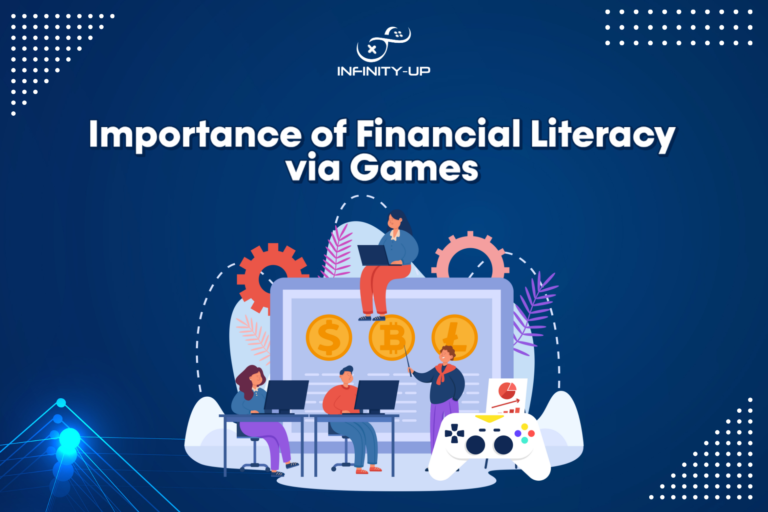
Importance of Financial Literacy via Games
Whether you are just starting to invest or trying to understand compound interest, video games make money topics stick. With regular practice, especially playing AAA Games, you build confidence and learn in a pressure free space. For example, financial learning games use quick multiple choice questions on credit, investing, and fraud prevention, letting teens learn money skills in a fun, competitive way.
Strategies for Teaching Financial Literacy via Games
Financial literacy is the knowledge of budgeting, saving, and managing debt. Sadly, most people do not learn these skills in school, so they learn via games. Below are the ways to involve financial literacy in games:
Virtual Money Management:
Players can virtually learn the consequences of overspending or the benefits of saving without real world risk.
Risk & Smart Investing:
Players build pretend investment portfolios, buying and selling stocks, and more to see how the market affects their money.
Budgeting Challenges:
Players set money goals and budgets. Surprise expenses or bonus income help them learn how to adjust and plan better.
Debt Repayment Games:
These games show how to pay off debt using smart methods like snowball or avalanche in a fun and competitive way.
Entrepreneurship Abilities:
Players build and run virtual businesses, learning how money comes in, goes out, and is turned into profit.
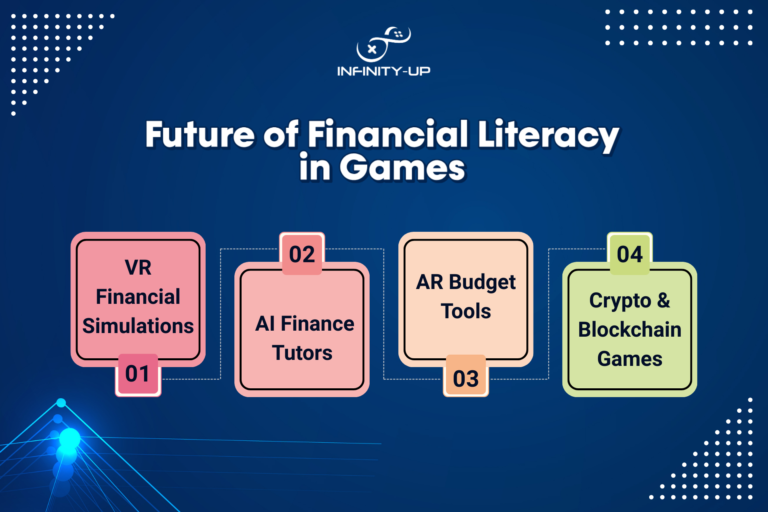
Future of Financial Literacy in Games
Learning about money is now more advanced and interesting, rather than being a chore. The Future of Games in financial literacy involves:
VR Financial Simulations:
Practice complex financial decisions like debt and risk management in a lifelike environment using virtual reality.
AI Finance Tutors:
Learn your spending and offer personalized challenges to help you save more and spend smarter.
AR Budget Tools:
Use your phone to see your spending and budget for real, like watching your money choices play out in front of you.
Crypto & Blockchain Games:
Learn how digital currencies work through games that explain blockchain in simple yet interactive ways.
INFINITY-UP’s Role in Financial Literacy
At INFINITY-UP, we make learning about money precise and easy. Our platform helps businesses keep players engaged with tools like smart bonuses and automated messages. Players stay excited while learning real life financial skills with features like scratch cards, loyalty wheels, and jackpots. We understand player behavior and give them the right reward at the right time, handle all the tech setup, and work with all major platforms. We turn money lessons into exciting games with no boring stuff, be it saving and budgeting challenges or running virtual businesses.
Conclusion
Financial literacy doesn’t have to be intimidating or dull; games make it engaging, safe, and accessible for all ages. By turning real world money concepts into interactive challenges, players can build habits that last a lifetime without the risk of costly mistakes. From budgeting and investing to understanding debt and entrepreneurship, these game based experiences transform learning into an enjoyable journey. As technology continues to evolve with VR, AI, and blockchain, the future promises even more engaging and personalized ways to master money skills, empowering people to make smarter financial choices, one game at a time.
Ready to turn financial education into a game everyone loves? Let us build smarter players together. Start with INFINITY-UP today!
FAQs
Q1: What is financial literacy?
Financial literacy means understanding how money works, how to earn it, save it, spend it wisely, and grow it. It helps people make smart decisions about budgeting, saving, and avoiding unnecessary debt.
Q2: What learning outcomes can be achieved through financial games?
Well designed financial games help people understand important money concepts simply and practically. Players can learn about making smart choices, how savings grow over time, managing a budget, spreading risk when investing, and setting financial goals, all by learning through hands on experience instead of just theory.
Q3: Can gamified financial learning really improve real-life money habits?
Yes. When people practice financial decisions in a game environment, they become more confident and aware, which often leads to better saving and spending habits in real life.
Q4: How can financial institutions use gamification for customer education?
Banks and fintechs use gamification in apps to teach users about budgeting, credit scores, or investment basics, while also encouraging consistent use through badges, streaks, rewards, and progress tracking.
Q5: Are financial learning games suitable for kids and adults?
Yes. Many financial games are designed for different age groups, from children learning basic saving habits to adults improving their money management skills.